Metatranscriptomic Sequencing
Home
>
Microbiome
> Metatranscriptomic Sequencing
Metatranscriptomic Sequencing for Microbiome Functional Profiling
Capture real-time microbial activity with high-resolution RNA sequencing. Analyze active gene expression across bacteria, fungi, viruses, and archaea to reveal functional pathways in environmental, agricultural, and microbiome research.
Our end-to-end metatranscriptomic sequencing service delivers reliable, publication-ready data with expert bioinformatics support.
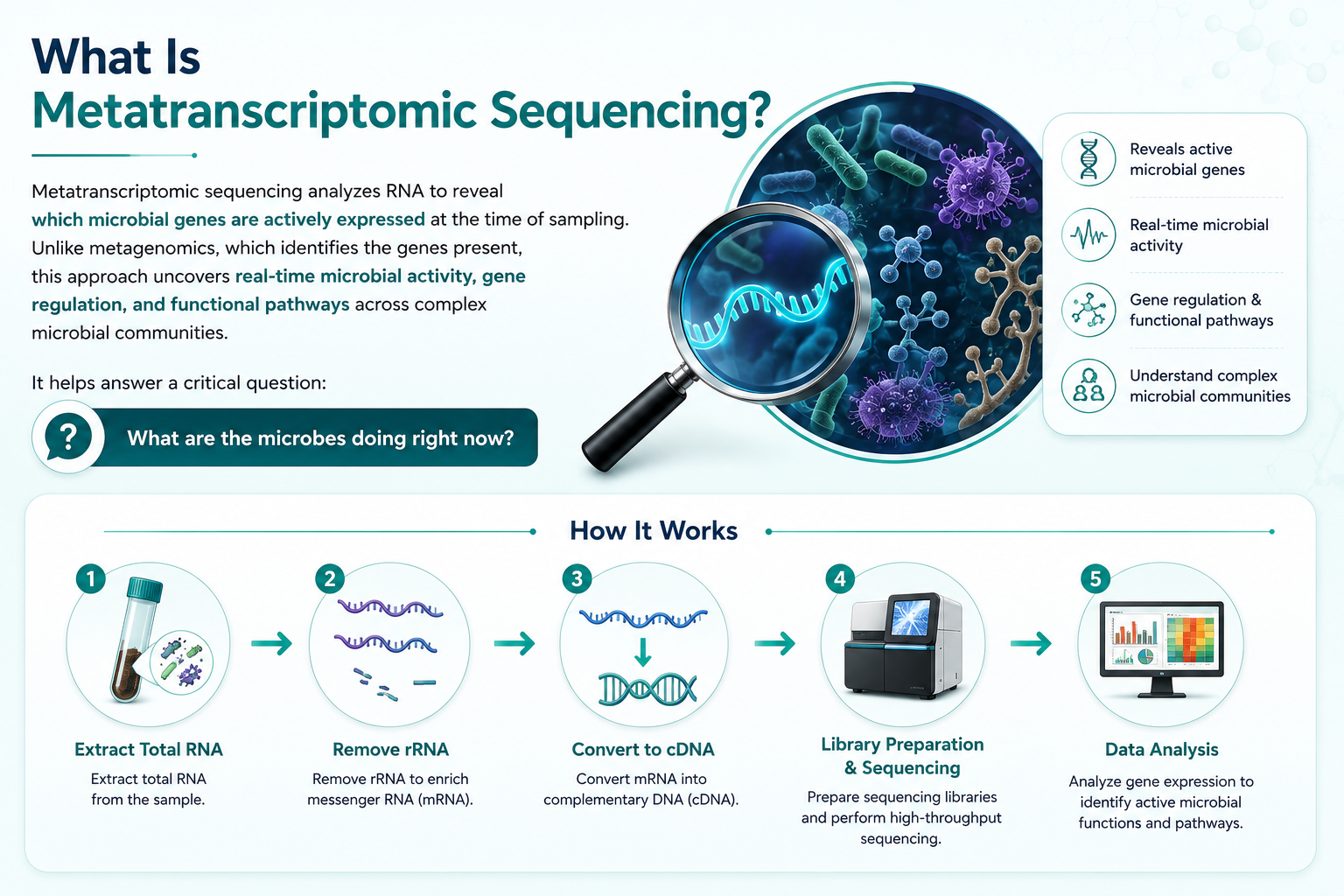
Metatranscriptomic sequencing analyzes RNA to reveal which microbial genes are actively expressed at the time of sampling. Unlike metagenomics, which identifies the genes present, this approach uncovers real-time microbial activity, gene regulation, and functional pathways across complex microbial communities.
It helps answer a critical question: What are the microbes doing right now?
How It Works
• Extract total RNA from the sample.
• Remove rRNA to enrich messenger RNA (mRNA).
• Convert mRNA into complementary DNA (cDNA).
• Prepare sequencing libraries and perform high-throughput sequencing.
• Analyze gene expression to identify active microbial functions and pathways.
Why Choose Metatranscriptomic Sequencing?
Metatranscriptomic sequencing reveals active microbial functions, providing insights beyond DNA-based methods by showing which genes are being expressed in real time.
Key Benefits
• Real-time functional profiling of bacteria, fungi, viruses, and archaea
• Culture-independent analysis of entire microbial communities
• Dynamic expression studies across different conditions or time points
• Pathway and biomarker discovery using functional databases
• Multi-omics compatibility with metagenomics, transcriptomics, and metabolomics
Metatranscriptomics vs. Other Microbiome Methods
Method
Detects
Functional Activity
Best For
16S/ITS Sequencing
Marker genes
No
Taxonomic profiling
Metagenomics
Microbial DNA
Potential only
Community composition & gene content
Metatranscriptomics
Active microbial RNA
Yes
Gene expression & functional analysis
Host Transcriptomics
Host RNA
Yes
Host response studies
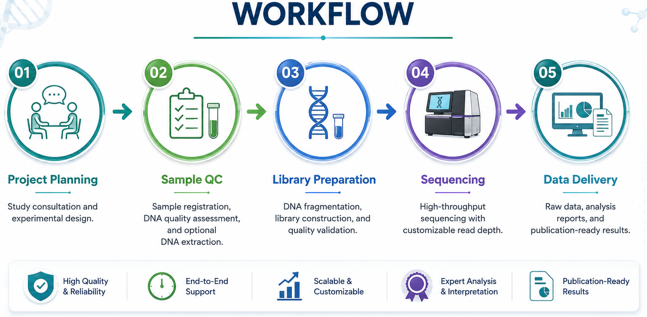
Workflow
• Project Planning – Define research goals and study design.
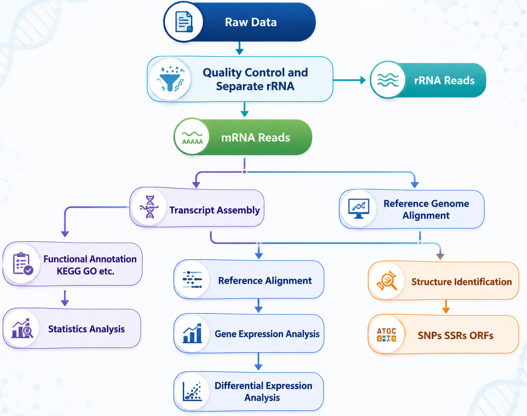
- Antibiotic resistance and virulence gene analysis
- Pathway enrichment analysis
- PCA, heatmaps, volcano plots, LEfSe, and other publication-quality visualizations
- Statistical reports and normalized expression tables
Sample Requirements
To achieve high-quality sequencing results, samples should meet the recommended RNA quantity and quality standards. Our team also provides guidance for specialized or low-input samples.
Sample Type
Minimum Requirement
Total RNA
≥4 µg (minimum 3 µg), ≥50 ng/µL
Cultured Cells
≥5 × 10⁶ cells
Environmental Samples
≥1.5 g
Need help preparing your samples? Contact our experts for personalized recommendations before submission.
Is Metatranscriptomic Sequencing Right for Your Research?
Metatranscriptomics measures active microbial gene expression, helping researchers understand how microbial communities respond to changing conditions and biological processes.
Ideal Applications
• Health and disease microbiome research
• Drug, diet, and environmental intervention studies
• Soil, water, and agricultural microbiome analysis
• Probiotic and microbiome therapeutic development
• Functional analysis of unculturable microorganisms
Common Research Questions
• How does microbial activity change after treatment?
• Which genes and pathways respond to environmental or dietary changes?
• Can active functions be detected in unculturable microbes?
• Which microbial genes support biomarker or probiotic discovery?
Multi-Omics Integration
Combine metatranscriptomics with complementary technologies for a more complete understanding of microbial biology.
Combined Approach
Key Benefit
Metagenomics + Metatranscriptomics
Compare genetic potential with active gene expression
Host Transcriptomics + Metatranscriptomics
Explore host–microbe interactions and immune responses
Metabolomics + Metatranscriptomics
Connect gene expression with metabolic activity
16S/ITS + Metatranscriptomics
Screen large sample sets before detailed functional analysis
Integrating multiple omics approaches provides deeper biological insights, enabling more comprehensive microbiome and systems biology research.
• High-quality RNA library preparation with efficient rRNA depletion
• Flexible sequencing platforms and customizable depth
• Expert bioinformatics support and publication-ready reports
• Fast turnaround and dedicated technical assistance
Our metatranscriptomic sequencing services help researchers uncover microbial activity, identify functional pathways, and generate meaningful biological insights across environmental, agricultural, clinical, and microbiome studies.
1. What are the key requirements for RNA samples?
RNA samples should be collected using sterile, RNase-free materials to prevent contamination. Fresh samples should be immediately preserved (for example, using liquid nitrogen) or submitted following recommended storage conditions. We recommend high-quality RNA with sufficient quantity and concentration for successful sequencing.
2. How do you ensure sample and sequencing quality?
All RNA samples undergo quality assessment before sequencing, including RNA integrity testing. Library quality is evaluated for size and purity, followed by qPCR-based quantification before sequencing. Final sequencing data undergo strict quality filtering to ensure reliable, high-quality results.
3. What are the advantages of metatranscriptomic sequencing?
Metatranscriptomics provides a direct view of active RNA expression within microbial communities. It enables detection of microbial functions, RNA viruses, host–microbe interactions, and ecological changes without the need for culturing.
Key advantages include:
• Captures active microbial and viral transcripts
• Enables discovery of novel RNA viruses and functional genes
• Provides insights beyond DNA-based sequencing
• Supports analysis of microbial activity and community dynamics
• Requires minimal sample processing compared with traditional approaches
4. Are my samples suitable for metatranscriptomic sequencing?
Yes. We provide sample feasibility assessments based on your research goals and sample type. Our experts help determine the appropriate sequencing platform, depth, and analysis strategy before starting the project.
5. Can metatranscriptomics be combined with other omics approaches?
Yes. Metatranscriptomics can be integrated with metagenomics, metabolomics, and host transcriptomics to provide deeper insights into microbial functions, interactions, and biological pathways.
Address:Registered Office: 138, Patparganj Industrial Area, New Delhi – 110092, India
Operational Address: National Institute of Plant Genome Research (BRIC - NGGF)
Lab No. 206 and 207, Aruna Asaf Ali Marg, P.O. Box No. 10531,
New Delhi – 110067, India